

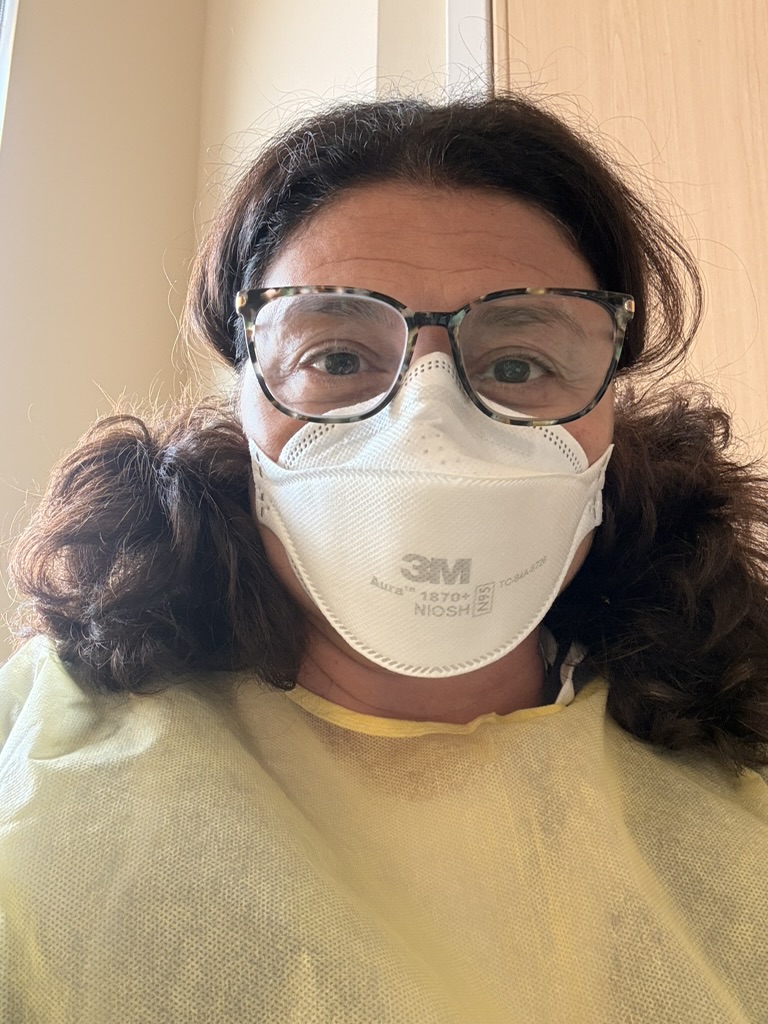
Sadly, Mr. KK and I have spent quite a bit of time in Emergency Departments and Hospitals with our parents over the last year. In doing so, we have discovered that there is myriad of things that we are not being told, and that are not common knowledge.
We have had some hard lessons this year; I’m sharing them with you in the hopes that you can be prepared if you ever find yourself at the hospital. (And I hope you do not.)
There are very few “emergencies” in the emergency room. I’m not belittling life-threatening injuries or episodes, but I would say 90% of the people in the emergency room are there because it was the only game in town. If you need medical assistance at 9pm, there is literally nowhere else for you to go. Once you remove all the people who are having a true emergency room, the place just turns into one big waiting room for a doctor’s appointment. So you wait. And wait. Time stands still in the ER. It’s like being a casino – there are no windows and you somehow spent a boatload of money. When you first arrive they may fuss over you, order a zillion tests, check on you. But after a while, you realize that “The doctor will be by soon” could mean 3 hours.
You need to stay for 3 days. Like hotels, hospitals have a minimum night stay for some things. If the hospital is recommending any type of rehab – physical or occupational – in order for health insurance to cover your rehab stay, you must have completed 3 nights in the hospital. But there’s a catch! Your time in the ER does not count. The clock starts ticking once you are admitted into a hospital bed in a room. One time, my mother was being discharged from the ER with an order for live-in rehab at a local facility.
Me: “Will insurance cover her stay?”
Nurse: “No, since you mother was only in the ER and not admitted.” (I challenge the use of the word “only” here.)
Me: “Ok, then can you admit her so she can get her 3 days in so this can be covered?”
Nurse: “No, I’m sorry, there is no medical reason for us to hold her here. She’s being discharged.”
Inpatient and Outpatient are extremely different entities. When you are admitted to the hospital, you are considered “inpatient”. When you come to a part of the hospital for an appointment, that is considered “outpatient”. These are two very different things.
Here’s how we found this out:
My father-in-law had been admitted to the hospital on a Wednesday and was being monitored and undergoing testing. Separately, he had a doctor’s appointment coming up on Friday in another part of the hospital for immunotherapy. On Thursday, we asked the staff what the plan would be to get him from his hospital bed down to his appointment the following afternoon, since he was having trouble walking.
Staff: “Ohhhh. Well, he can’t go to that appointment while he’s here in the hospital.”
Us: “WTFDYM? He’s literally already AT the hospital. We just need to get him downstairs.”
Staff: “That’s an outpatient appointment. He’s inpatient right now in the hospital.”
Us: “So what you’re saying is that even though he is physically IN the hospital, and just 7 floors above where he needs to be tomorrow afternoon, he cannot attend his immunotherapy appointment at the hospital because he is in the hospital?”
(We ended up pushing for him to be discharged on Friday morning so that he would not miss his immunotherapy appointment. But that would not have happened if we did not advocate for him.)
There is such a thing as a safety sitter. I didn’t find this one out until yesterday, but this is 100% someone we could have used during our hospital stays. Basically, if you are worried that your loved one might try and get out of bed (when they shouldn’t be) or might try and do something else they shouldn’t be doing, and you cannot be at their bedside 24/7 to watch over them or you do not want to be the person the patient starts to hate because you keep telling them “no”, you can ask the hospital for a safety sitter. This person will sit with the patient to ensure that they don’t do anything crazy to get themselves hurt. The hospital will NEVER suggest this person to you. They will see you there at the bedside, pleading with the patient to stay put or they will fall, and just assume you have things under control. If you don’t ask for it, you don’t get it.
There is no ONE PERSON who knows what’s going on. Between shift changes and schedule rotations, you could be in the hospital for 3 days and never see the same nurse or doctor twice. It’s hard not to feel like you’re being passed around like a bad cold. You are trying to be the holder of all the knowledge, and find yourself repeating the patient’s history 347 times a day. Did you know you can request a meeting with the full care team to make a care plan? ASK FOR IT.
Nurses are the heroes. You probably already knew this, but it’s the nurses that you’ll remember from your hospital visit. For me, it was the kind nurse who got me a second chair, a blanket, and a warm ginger ale the night I stayed overnight in the hallway of the ER with my mother.
Everything about being at a hospital is stressful. First, no one wants to be there. Second, it’s filled with germs and sick people. Third, if you are the patient, you are scared you’re dying; if you are the caregiver, you are worried your loved one is dying. Lastly, the lighting is just awful; no amount of makeup can fix it.
If you find yourself at the hospital – and I hope you don’t – speak up for yourself. Ask questions. Then ask more questions. Request all the services. Be a nuisance. When they say, “I’ll get the doctor for you” and it’s been 2 hours, go find them and ask again.
Learn from my experiences; your loved one is lucky to have you.

